

I built Southlake CritterCare around the kind of care I believe dogs actually need.
I have never believed that simply putting dogs together and hoping they sort themselves out is good enough.
Dogs need room to move, fresh air to breathe, structure they can understand, and people who know what they are watching. A wagging tail does not always mean a dog is happy. A quiet dog is not always relaxed. A playful dog can still be overwhelmed.
That is why Southlake CritterCare was built differently.
I wanted a program where dogs are picked up safely, introduced carefully, grouped thoughtfully, and guided throughout the day, not rushed into a crowd and left to cope. The goal is not just to tire dogs out. The goal is to help them come home physically satisfied, mentally fulfilled, and emotionally settled.
After almost five decades of working with dogs, I have learned that good outcomes rarely come from luck. They come from reading body language well, making good decisions early, keeping groups manageable, and respecting each dog’s individual threshold.
That is the standard this business was built around.
WHY I BUILT IT THIS WAY
Most dog care is built around convenience: drop-off, large groups, indoor rooms, and high volume.
I wanted to build Southlake CritterCare around the dog’s experience instead.
That is why our dogs are picked up from home, transported safely, introduced one dog at a time, grouped thoughtfully, and guided throughout the day. It is why we work on recalls, nose touches, calm interruptions, and better choices instead of waiting for problems to escalate. It is why we use outdoor space, fresh air, movement, water, shade, and rest as part of the day, because dogs are animals with bodies, noses, instincts, and social needs.
They are not meant to spend every day packed into a noisy room with nowhere meaningful to go.
Fresh air matters. Space matters. Movement matters. So does structure.
That balance is the whole point.
HOW THAT PHILOSOPHY SHOWS UP IN PRACTICE
Our day is built around the dog’s experience from start to finish.
Dogs are picked up from home and transported safely in climate-controlled buses. New dogs are assessed carefully and introduced one dog at a time. Playgroups are arranged by more than size — we also consider confidence, play style, stimulation level, and social skill.
Whenever possible, dogs spend their playgroup time outdoors, where they can run, sniff, splash, explore, and enjoy fresh air. In warmer weather, our schedule is designed around Texas heat, with active play happening earlier in the day and dogs rotating between outdoor time and indoor cooling breaks as needed.
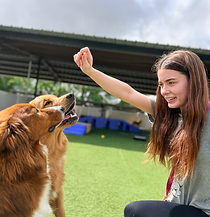
Handlers guide the group throughout the day using recalls, nose touches, calm interruptions, and positive reinforcement. That structure allows dogs to enjoy real play while still being supported by people who are paying attention.
Familiar people make dogs feel safer
Supervision should mean something. Good supervision is not passive.Our handlers are not just standing around watching dogs play. They are reading body language, monitoring arousal, interrupting early, rewarding recalls, redirecting pressure, and helping dogs make better choices before tension builds.A good playgroup should feel natural to the dogs, but it should never be unmanaged.


Careful introductions matter
A dog’s first experience shapes everything that comes after.
New dogs are introduced one dog at a time, with close attention to body language, confidence, curiosity, stress signals, and recovery. We do not throw a dog into a group and call it socialization. We watch. We guide. We adjust. We choose the next dog carefully.
That slower approach takes more time, but it gives us better information and gives the dog a fairer chance.
Fear-free is the standard
We do not use aversive methods.
Dogs learn best when they feel safe enough to think. That does not mean they are allowed to do whatever they want. It means we use clear guidance, positive reinforcement, structure, and thoughtful handling instead of intimidation, force, or fear.
A dog who feels safe is easier to teach. A dog who feels understood is easier to guide.

WHAT PUP PARENTS CAN EXPECT
You should not have to guess how your dog is doing when you are not there.
Our goal is to give owners honest insight into their dog’s social behavior, what they enjoy, what worries them, what kind of play suits them, and what support helps them succeed.
That means your dog is not treated like a number in a room. They are handled as individuals, with their own personalities, thresholds, preferences, and needs.
It is a more involved way to run dog care. It is also the only kind of care I would want for my own dogs.
MEET THE PEOPLE BEHIND YOUR DOGS
Our team is made up of handlers, drivers, groomers, caretakers, and dog people who spend their days doing the real work: reading body language, managing groups, cleaning messes, loading buses, cooling dogs down, noticing small changes, and making sure every dog is handled with patience and care.
The dogs know these people. That matters.
For many of our dogs, this team becomes part of their weekly rhythm, familiar faces, familiar voices, and familiar hands helping them feel safe.

ERIN

CHRIS

SELANIE

CLAIRE

TYLER

ZEKE
CADEY

BRY

EMMA

SPENCER

REED
